
 Magyar

| Location | Budapest |
| Investor | Alternative Secondary School of Economics |
| Floor area | 528 m2 |
| General designer | MCXVI Architects |
| Leading architect designer | László Herczeg |
| Project architects | Janka Kérdy, Julia Hegymegi |
| Architect designers | Krisztián Kiss, Eszter Kocsik, Sára Suri |
| Photos | Tamás Fenes DLA |
| Status | built |
| Project year | 2023-2025 |
In recent years, the primary school operating in the locally protected building on Kiscelli Utca has been expanded with a five-grade secondary school. The
Alternative Secondary School of Economics has been gradually developing the necessary infrastructure to accommodate the increased number of students and the specific requirements of its unique curriculum.
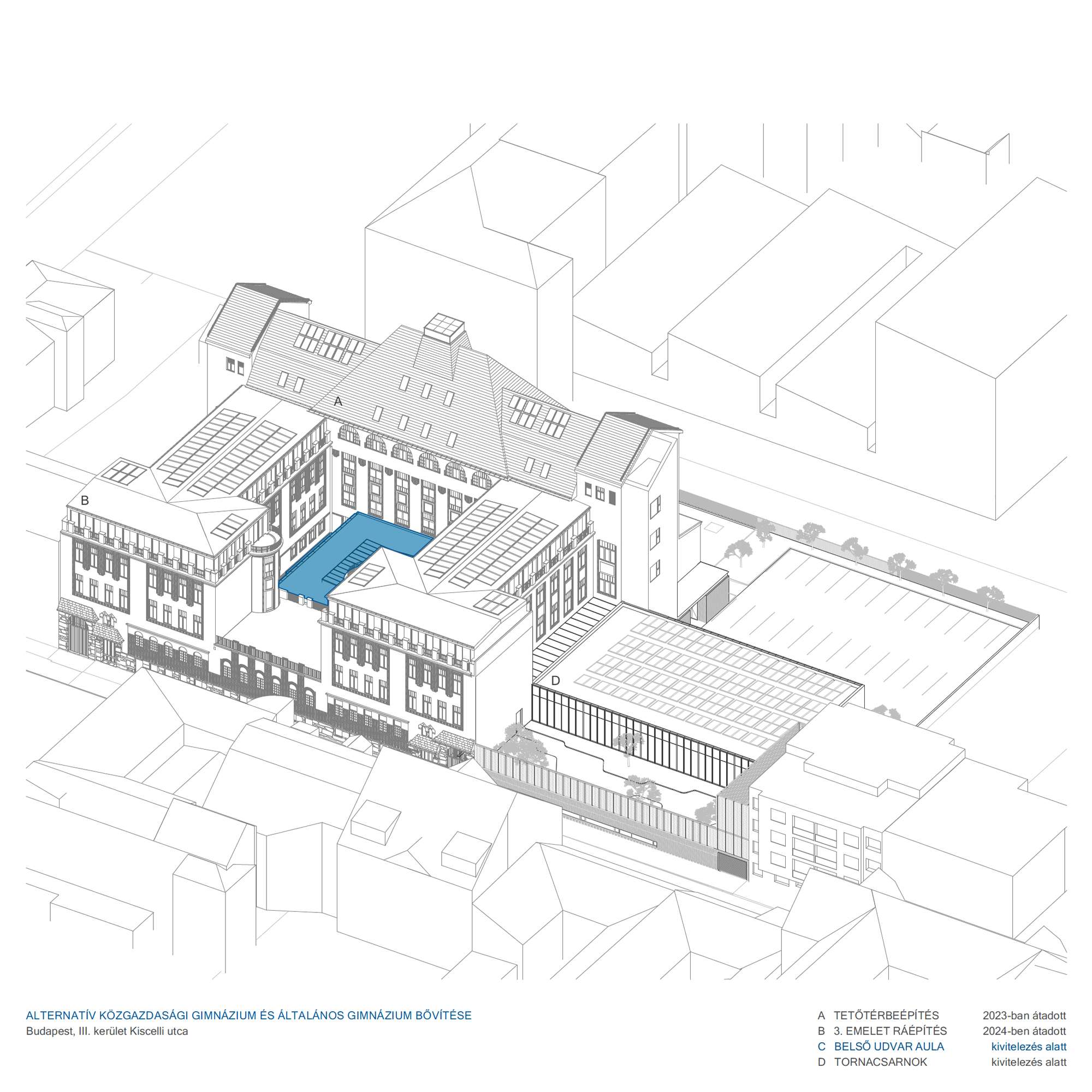
The program coordination and design development took place over several stages and is still ongoing. Numerous plans and layout sketches were prepared to address the expansion needs. In the first phase, the attic was converted, and an elevator tower was built. The second phase, the construction of the third-floor extension, was completed at the end of 2024.
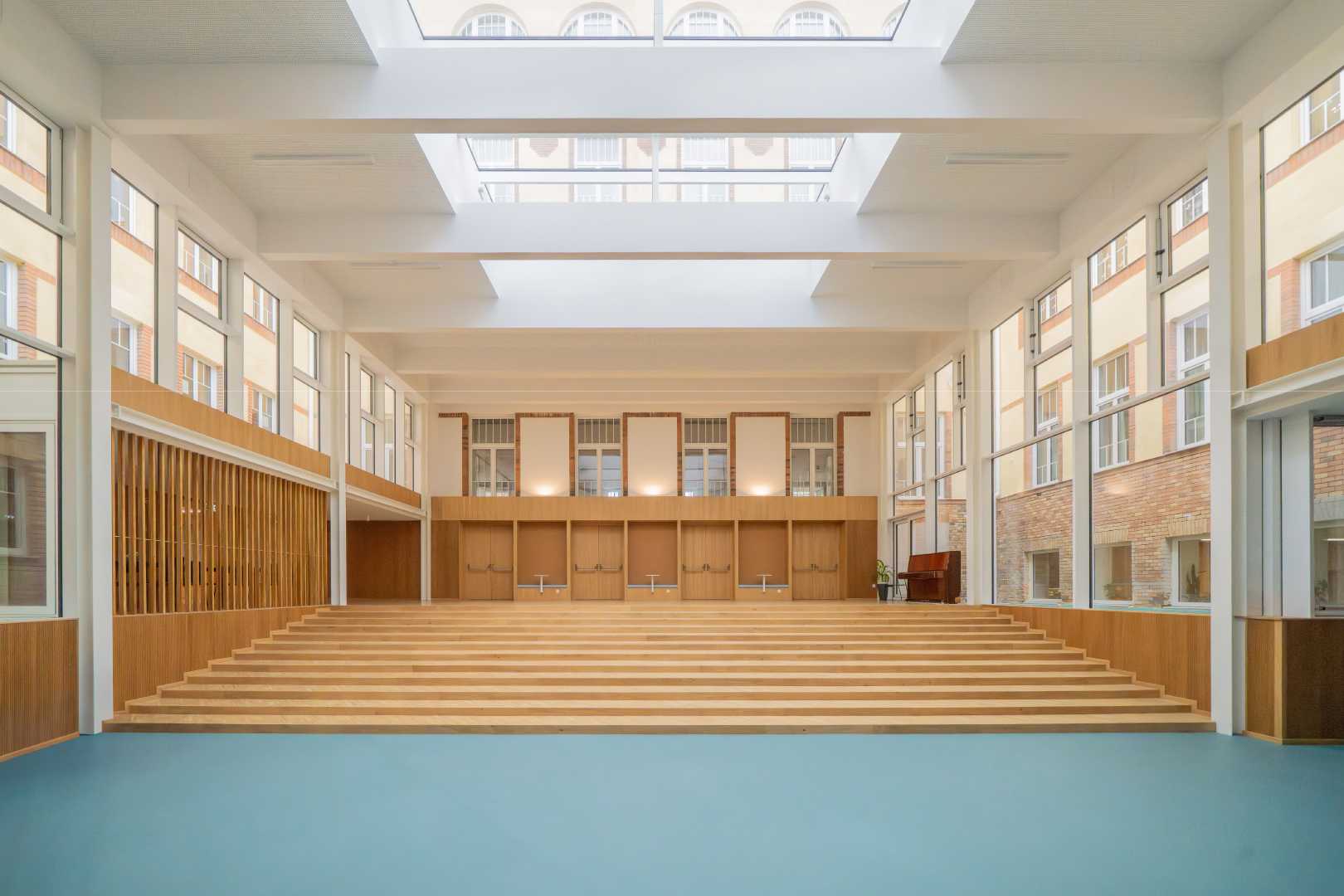
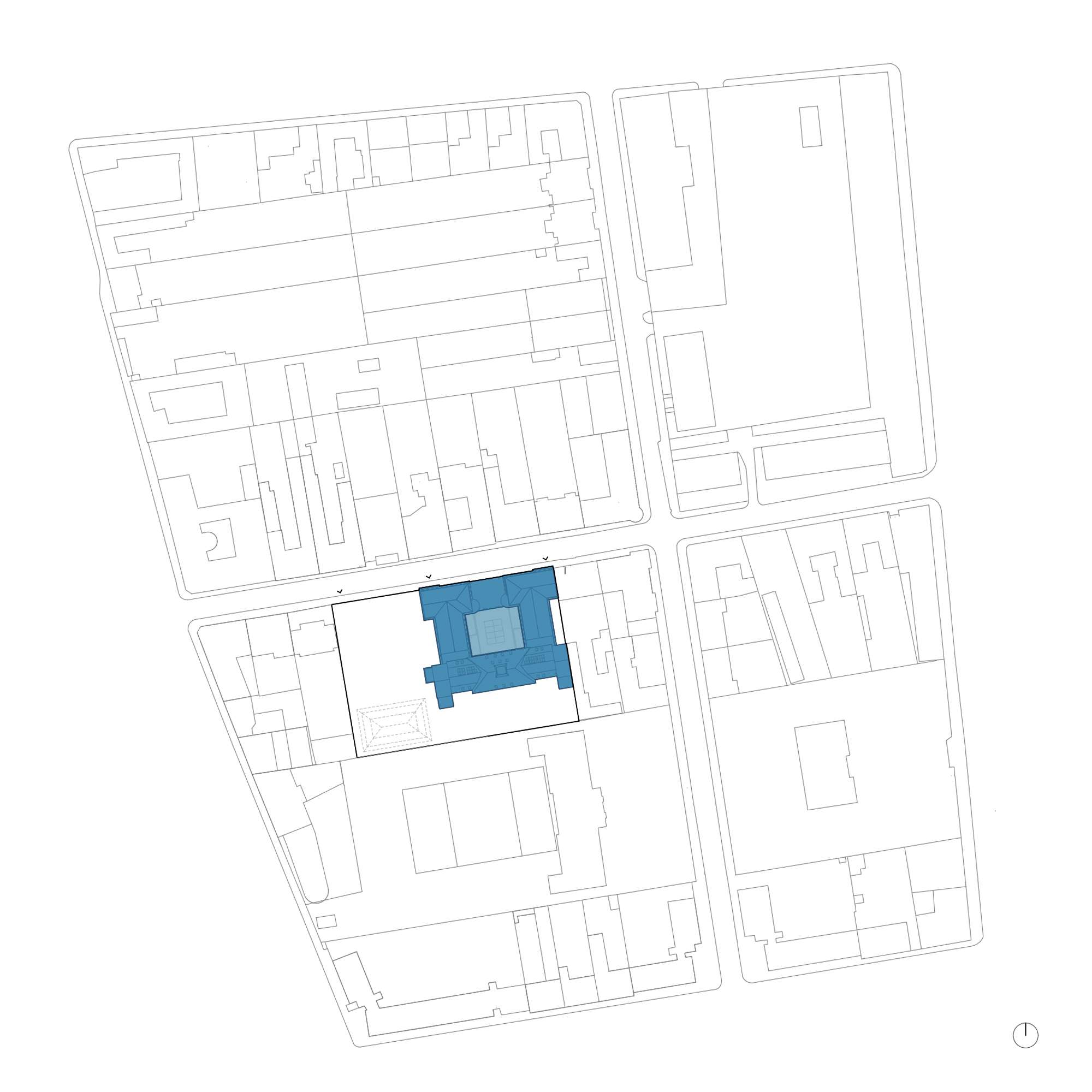
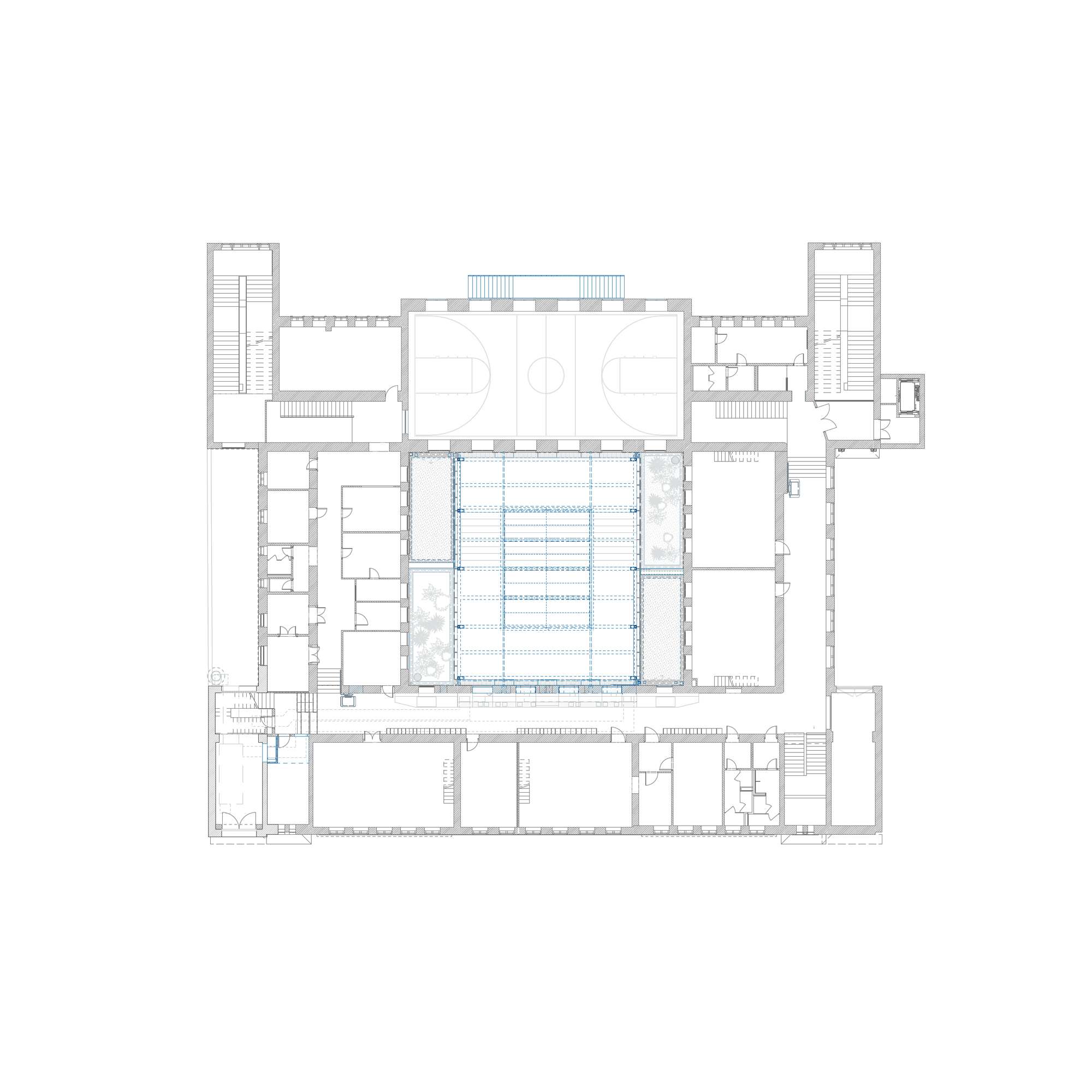
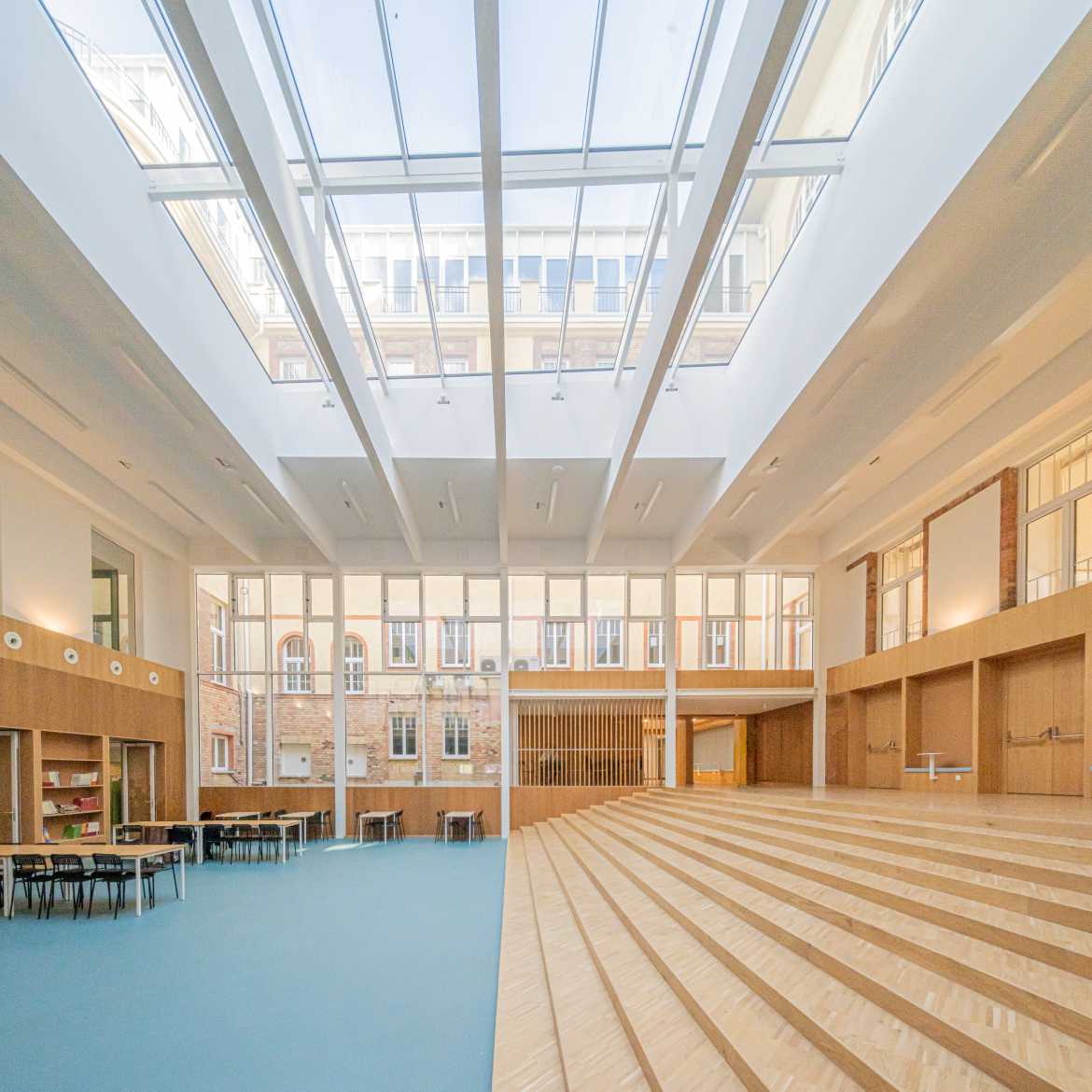
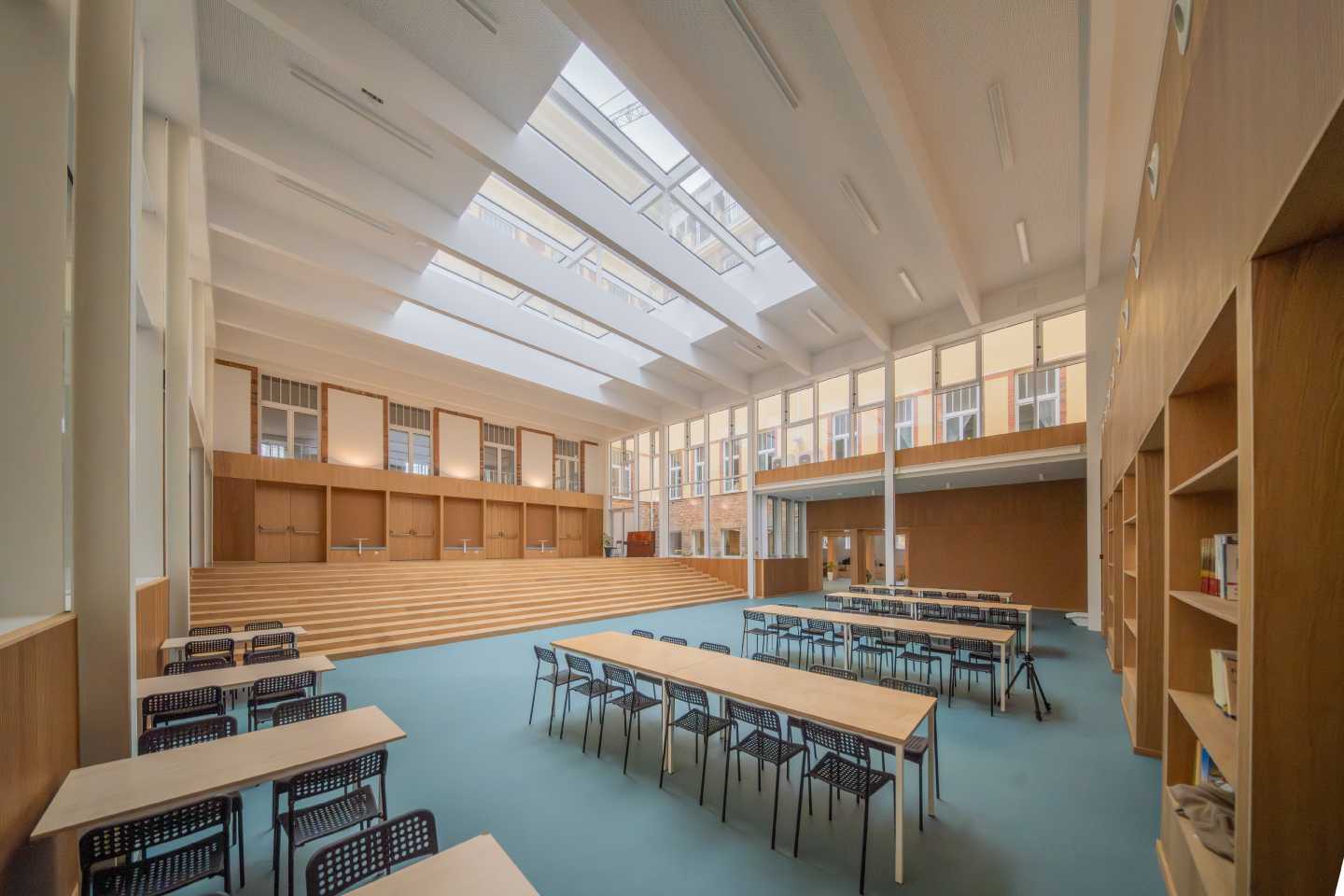
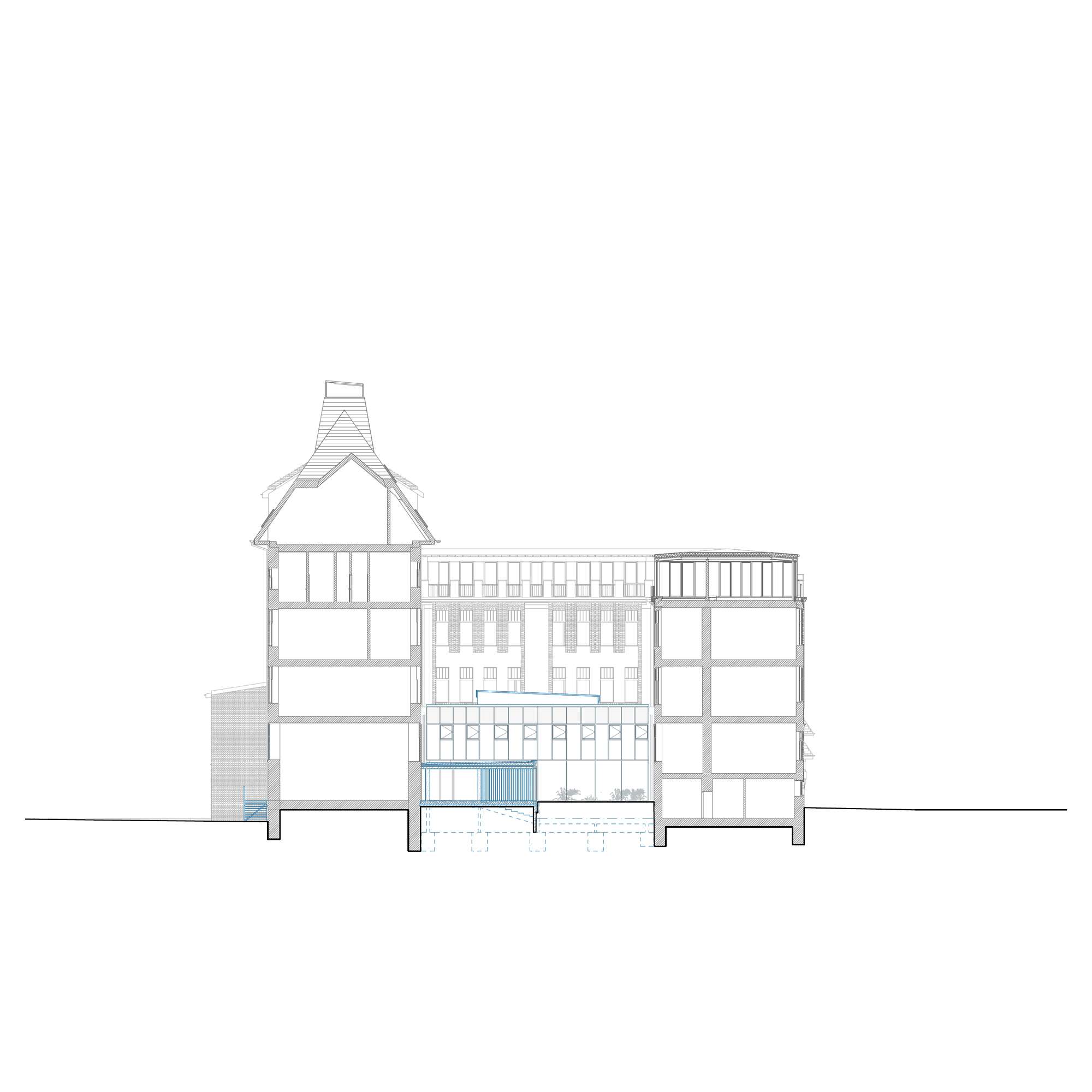
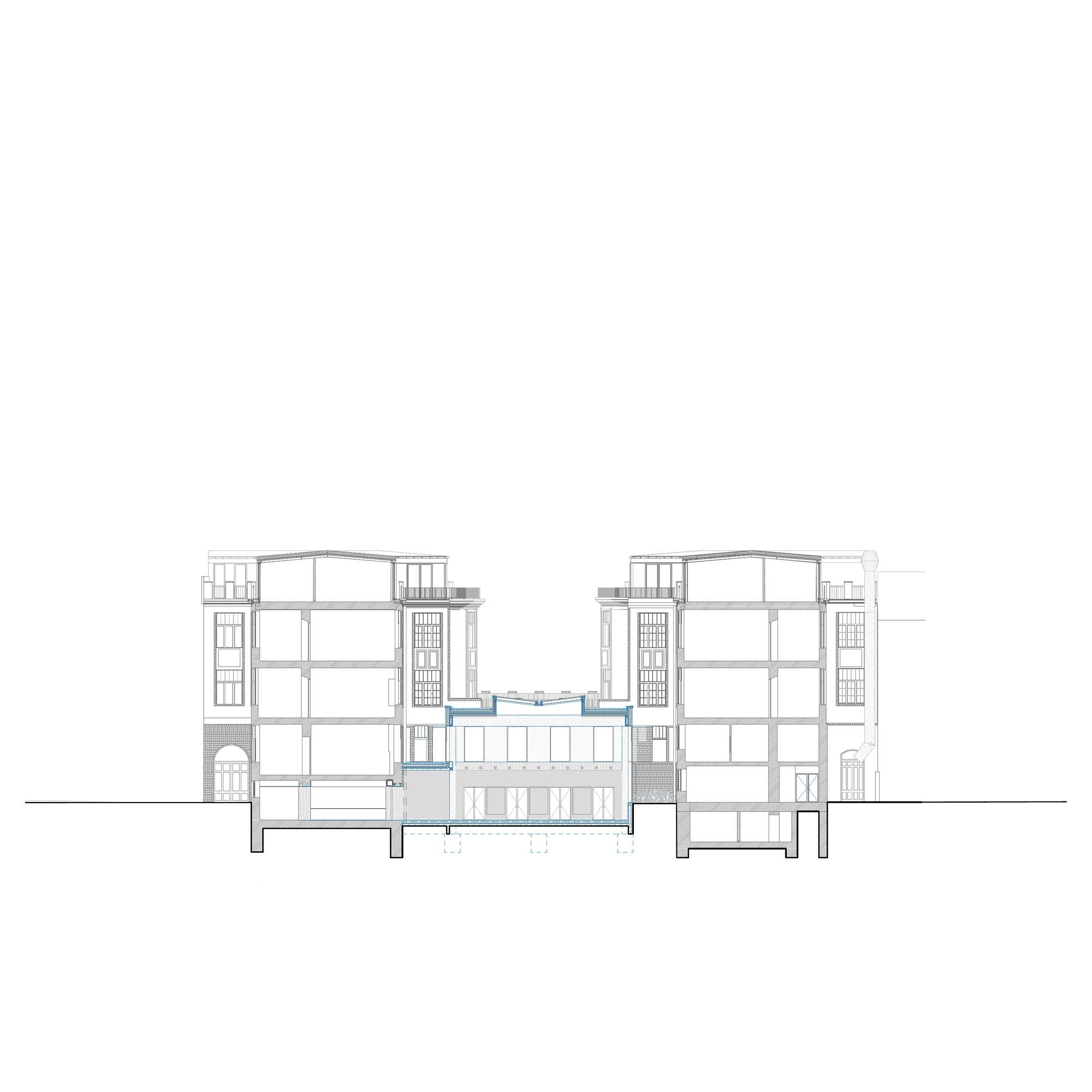
In the third phase, a new community space was created in the courtyard of the building designed by Kálmán Reich, at the very heart of the structure.
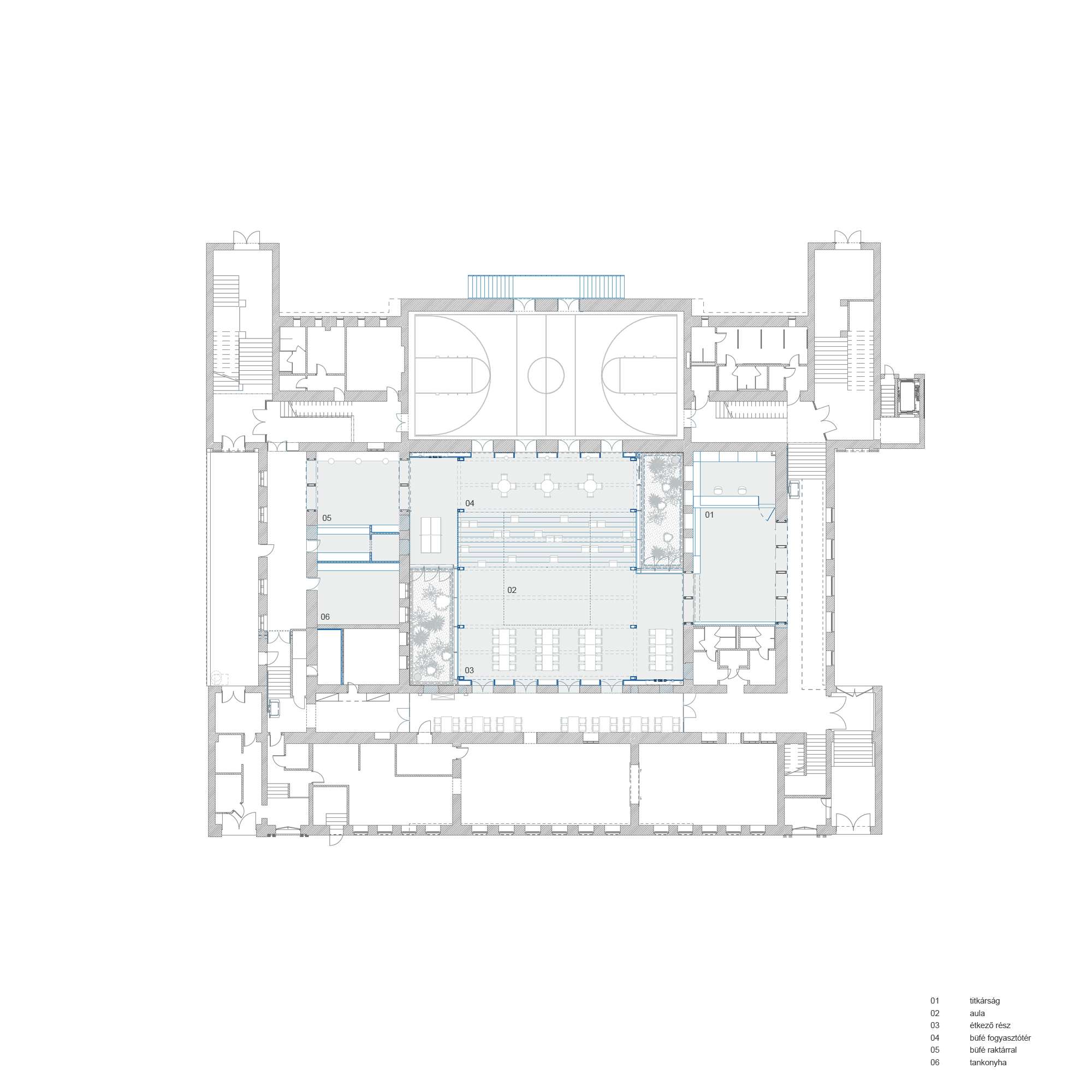
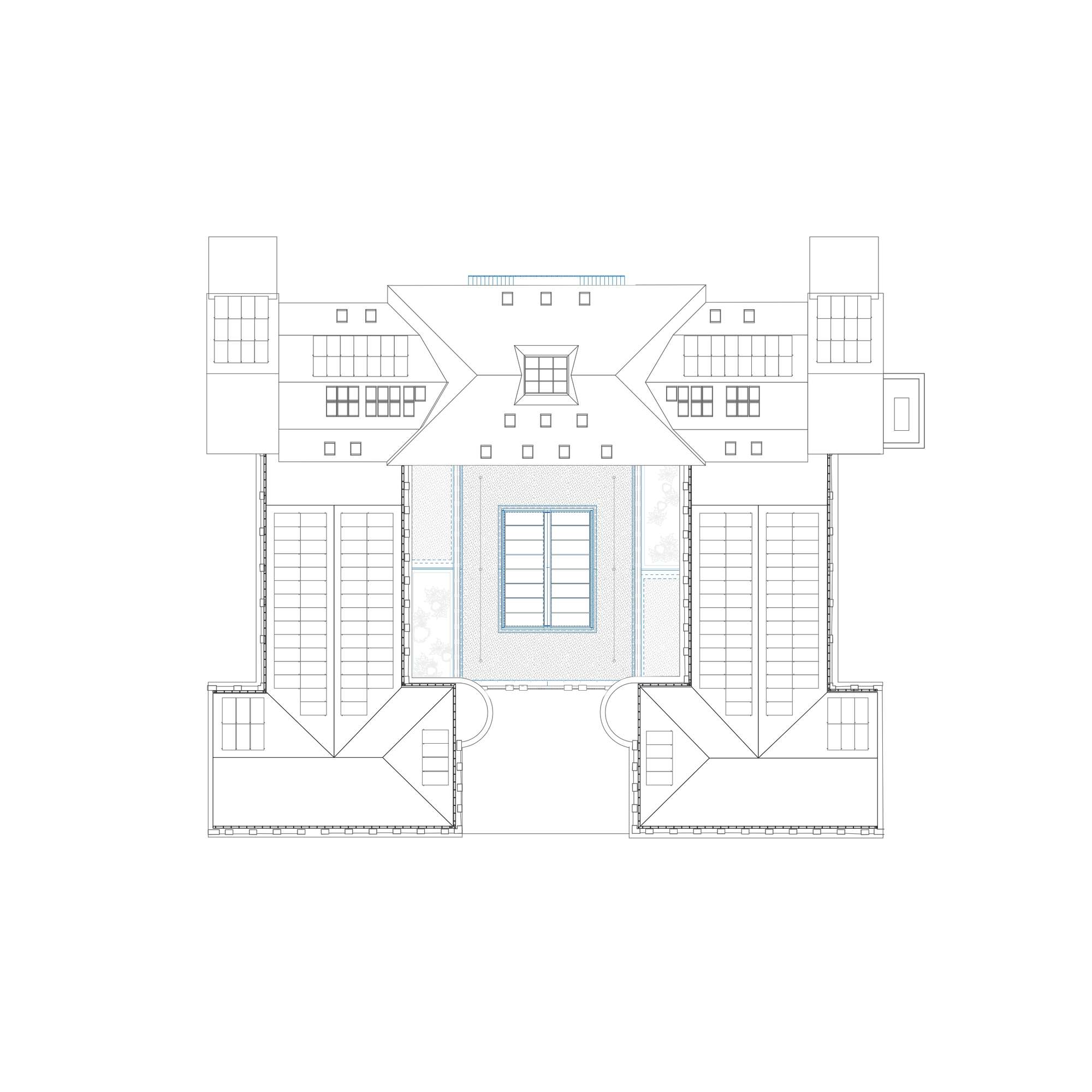
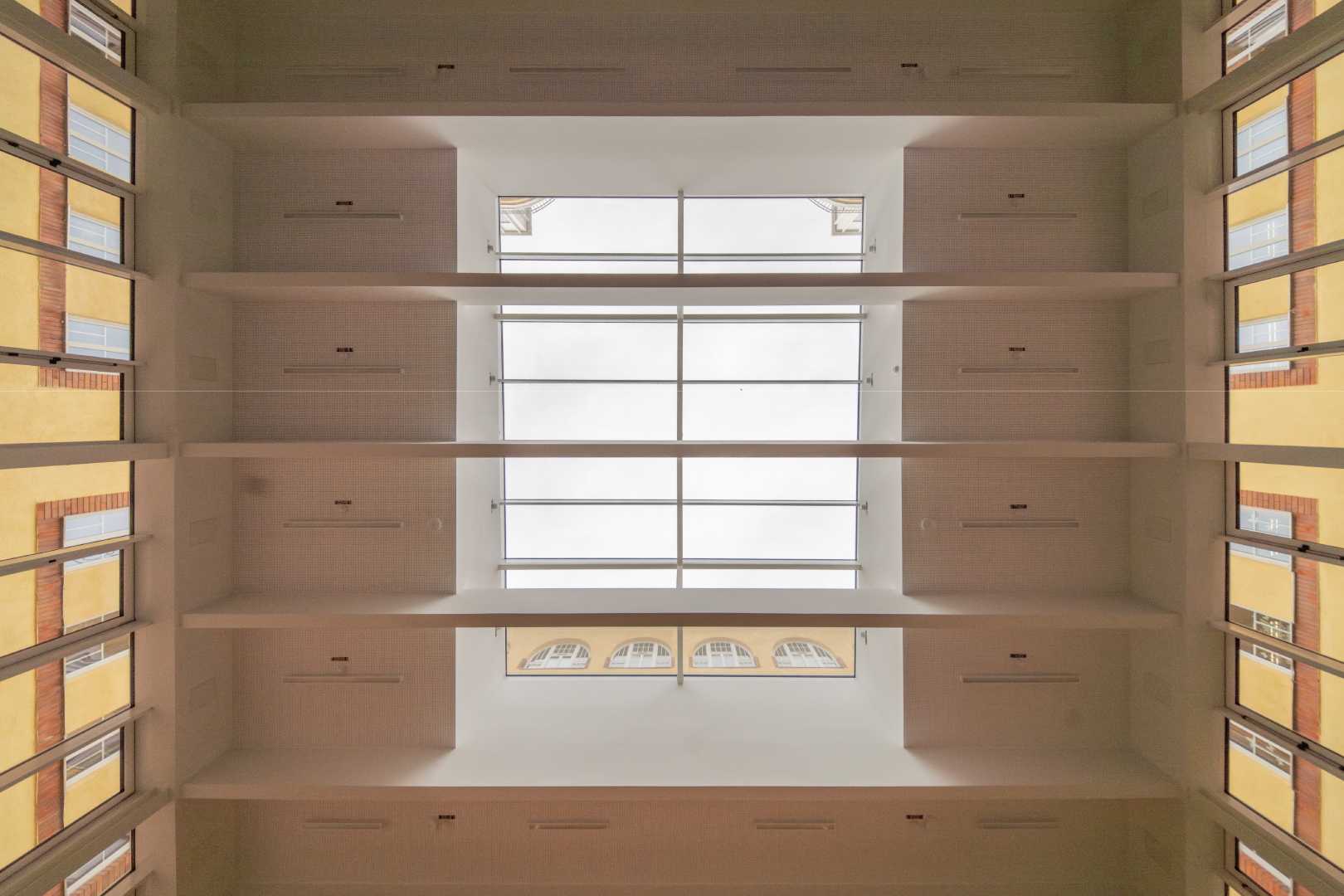
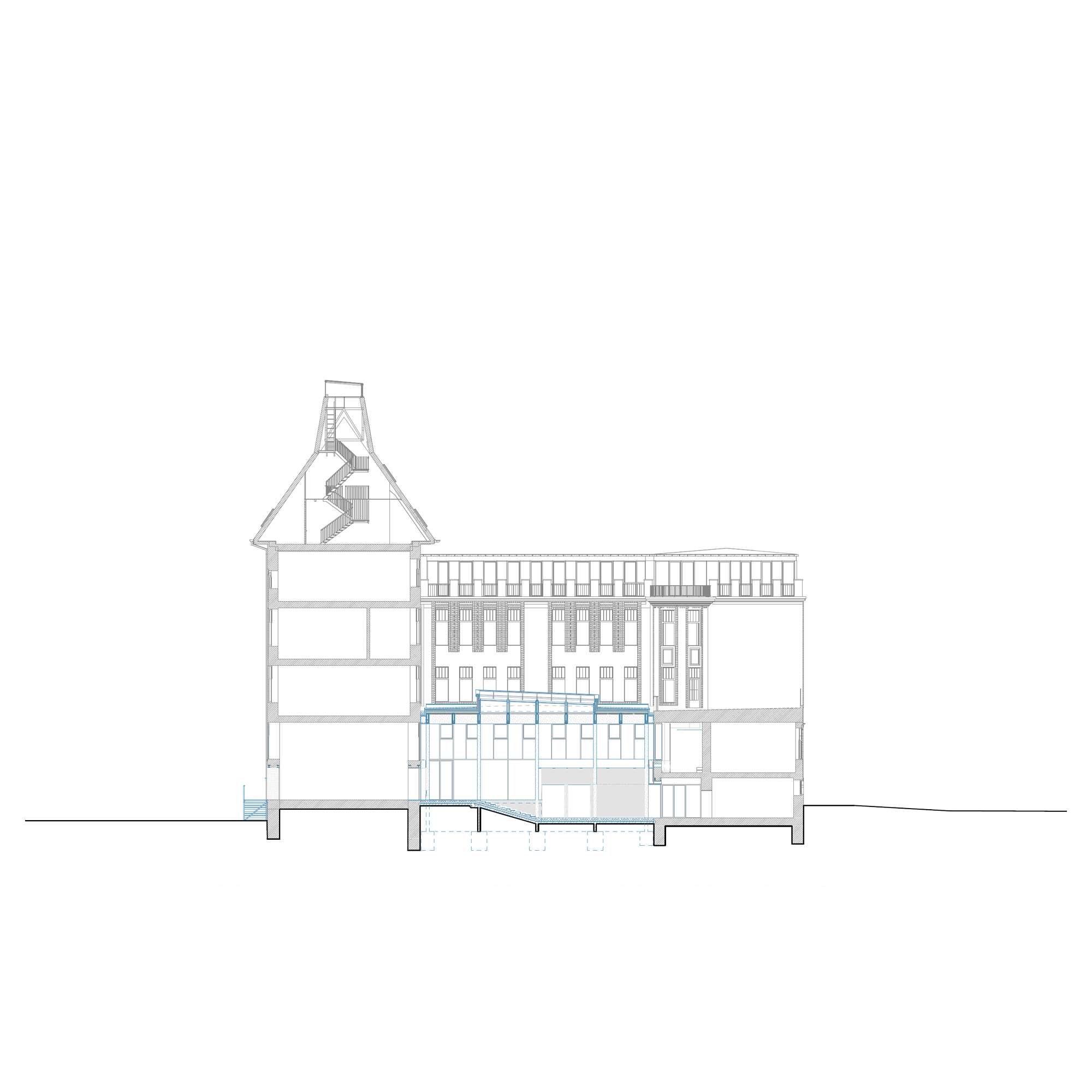
In a typical courtyard arrangement—similar to traditional tenement buildings—the circulation spaces open towards the courtyard. However, in the Kiscelli Utca school building, the situation was more complex. Therefore, on the side containing two classrooms, the new atrium walls were set back 3.5 meters from the existing façade. This had a positive effect on both the ventilation of the atrium and the existing rooms, and it also allowed for a more economical solution for the new atrium’s heat and smoke extraction through the two inner courtyards. With the raised central section of the courtyard structure, the new building continues the symmetrical composition of the existing one.
A key functional consideration during the design process was to create a stronger spatial connection between the main staircases. Previously, this circulation system had been almost completely separated by the double-height gym on the ground floor. In addition, an important element of the design program was to expand and make the kitchen’s dining area closeable. With the creation of two new openings in the existing building, the kitchen’s former corridor space was freed up and now functions as a service area.
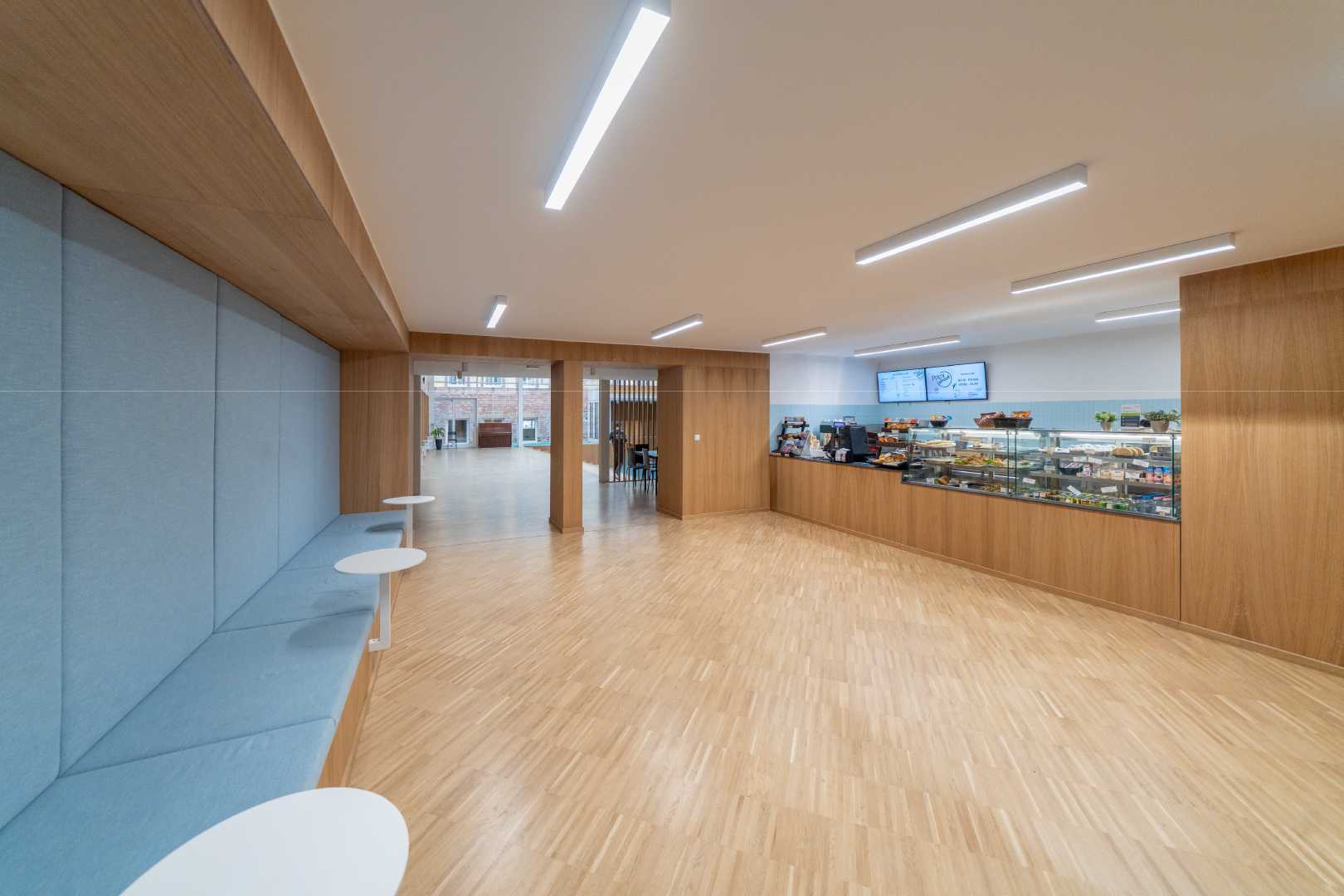
The atrium’s new passageways were complemented by two new functions: the administration office and the buffet. The central, skylit space—with its wide staircase bridging the level difference and its inner courtyards—creates a high-quality communal area for students. Beyond daily use, it is also suitable for various events such as screenings, ceremonies, and performances.
The atrium’s central position also influenced the structural design. In an operational school, the construction period is necessarily short, so prefabrication plays a crucial role. For this reason, we decided to design a steel structure for the roof covering.